
GCMS Curricula
Inquiry-based Learning
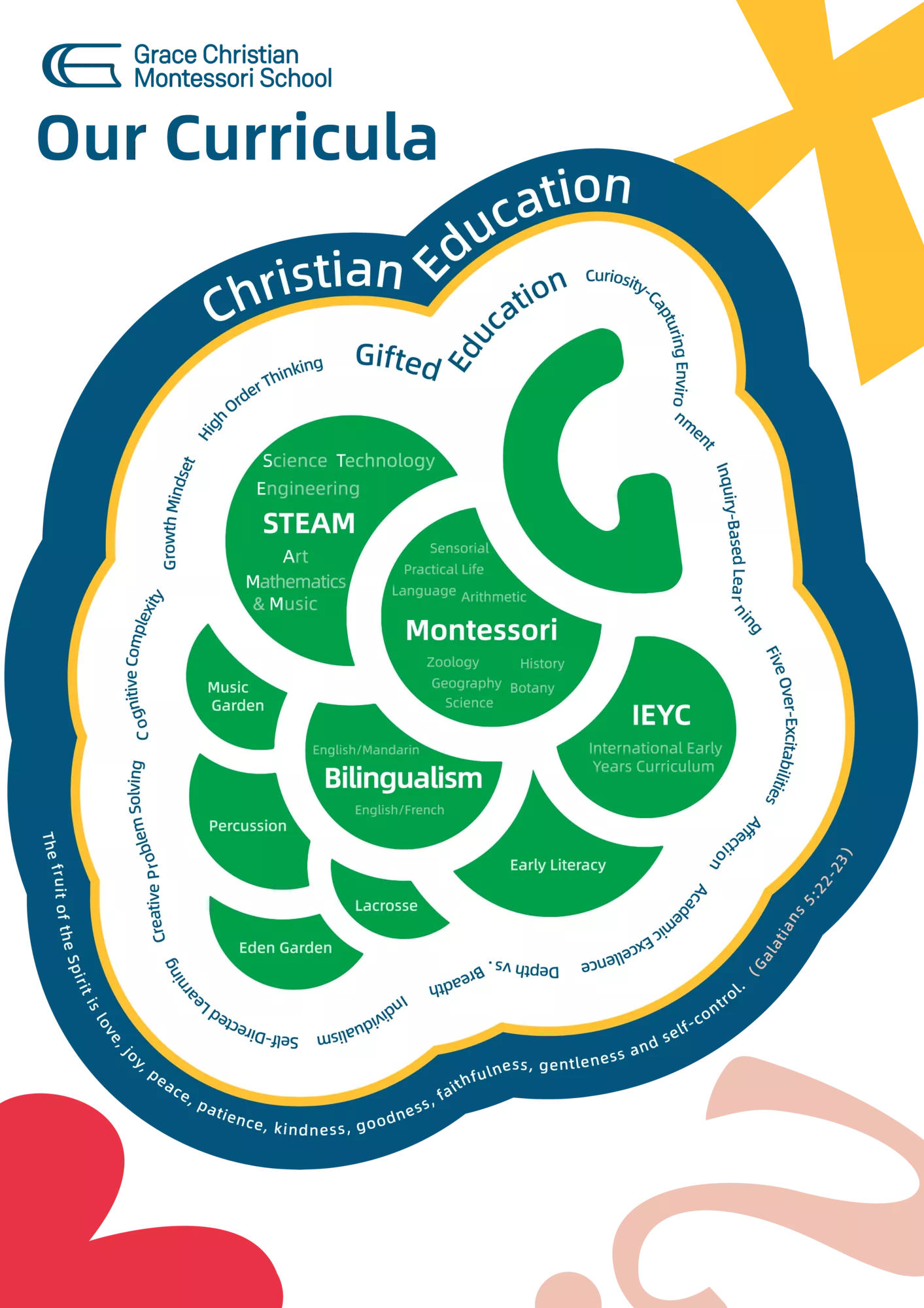
At Grace Christian Montessori School (GCMS), inquiry-based learning is a foundational element of our educational approach, designed to ignite curiosity and foster a love for discovery among our students. This method encourages children to ask questions, explore their interests, and engage deeply with the material, allowing them to take an active role in their learning journey.
In our vibrant and nurturing environment, students are empowered to investigate topics through hands-on experiences and collaborative projects. Educators at GCMS act as facilitators, guiding students as they formulate questions, conduct experiments, and analyze findings. This approach not only enhances understanding of academic subjects but also nurtures high-order thinking, critical thinking, creativity, and problem-solving skills.
By integrating inquiry-based learning within our Christian education framework, we aim to cultivate not just knowledgeable students, but also lifelong learners who are equipped to navigate the complexities of the world. At GCMS, we believe that fostering inquiry helps each child recognize their unique gifts as masterpieces of God, preparing them to make meaningful contributions to their communities and live out their faith.
High Order Thinking
At Grace Christian Montessori School, we are dedicated to cultivating an educational environment that embodies Higher Order Thinking (HOT) as a cornerstone of our instructional philosophy. HOT involves a spectrum of cognitive processes that inspire students to engage in critical analysis, synthesis, and evaluation of information, empowering them to transcend basic comprehension and develop a deeper understanding of the world around them.
Recognizing that every child is a unique masterpiece of God, we are committed to providing gifted education that nurtures each student’s individual strengths and abilities. Our thoughtfully designed curriculum challenges learners to tackle complex problems, appreciate diverse perspectives, and apply their knowledge in meaningful ways. Through inquiry-based learning and collaborative experiences, we strive to nurture independent thinkers who actively engage in their educational journeys.
By implementing HOT strategies, we aim to equip our students not only for academic excellence but also for responsible and compassionate citizenship. We believe that fostering these higher-order cognitive skills is vital in nurturing future leaders who can navigate the complexities of our society with confidence, grace, and purpose.
At GCMS, our Christian values guide us in empowering students to think critically, act ethically, and engage thoughtfully with the world around them. We are devoted to fostering a community of learners who recognize their divine purpose and are committed to serving others with integrity, compassion, and love.
Intercultural understanding
At GCMS, intercultural learning is the process of cultivating knowledge, skills, and attitudes to communicate effectively, appropriately and respectfully across cultural differences. Learners at GCMS are multilingual and explore their own cultural values, and those of others.
Intercultural understanding is about exploring human commonality, diversity and the interrelatedness of all nations and peoples, and the complexity of these. At GCMS, we encourage learners to appreciate critically their own perspective (beliefs, values, experiences and ways of knowing) as well as the perspectives of others.
They are open-minded and curious about other cultures, and display empathy and respect.
Multilingualism
All GCMS learners strive to communicate proficiently in at least two languages, encouraging intercultural learning and global engagement.
Global engagement
At GCMS, learners are passionate about exploring the wider world and their place in it. They are empowered with knowledge, skills, and attitudes to engage with issues of local and global importance, taking committed, collaborative action that makes a positive difference in the lives of others, and the health of the planet.